

A year and a half ago I was at a job that made me so depressed that I was faking being sick a couple of times a week just to avoid the office. On the first day of Chinese New Year 2025, I told myself: today is the day, Lin, new year, new life. So I resigned in the morning, with no plan B. I had pulled this off before: arrived in the UK knowing nobody, zero experience of the British market, landed my dream role within two months. I was confident that with some serious hustling, lightning would strike for me twice.
Guess what, shocker twist ending: it did not. Between Brexit and Trump, the island’s economy was in no mood to sponsor a foreigner’s work visa, and by the summer, I was kicked out of a country that once I thought could be my permanent home.
They say nobody ever regrets leaving a toxic job, but what nobody mentions is the stuff comes after: financial insecurity, self-doubt on a loop after each rejection, and more hard conversations with myself than I’d ever planned to have. I learned these lessons the hard way and genuinely did not expect I’d need them in the first 30 years of my life. So this one is for you, holding that resignation letter in your hand (or in your email draft), or you, currently stuck in an unemployment black hole.
1. side gigs keep you sane
I’ve always had jobs of some sort since 17, and I continue wanting to be in the productive workforce even if not in the form of an office job. It was not only a source of stability, but also a necessity to stay sane, to maintain social connections, and to have something to talk about when interviewing. I also found it helpful to have a role and affiliation when attending networking events. The sad truth about networking is that some registration forms literally won’t approve you without one, and it sucks to be made to feel invisible in a room full of lanyards.
So here’s what my year of “unemployment” looked like:
Supported the legendary journalist Evan Osnos at The New Yorker on a piece about China’s AI rise and its implication to the US-China relations.
Ran PR and digital comms for three European tech companies.
Planned China treks for eight US MBA programs — 800+ students, four academic breaks, creating SOPs for everything from visas to dietary restrictions.
Tore tickets and wrangled queues at the Roxie, San Francisco’s beloved independent cinema.
Started volunteering with older adults.
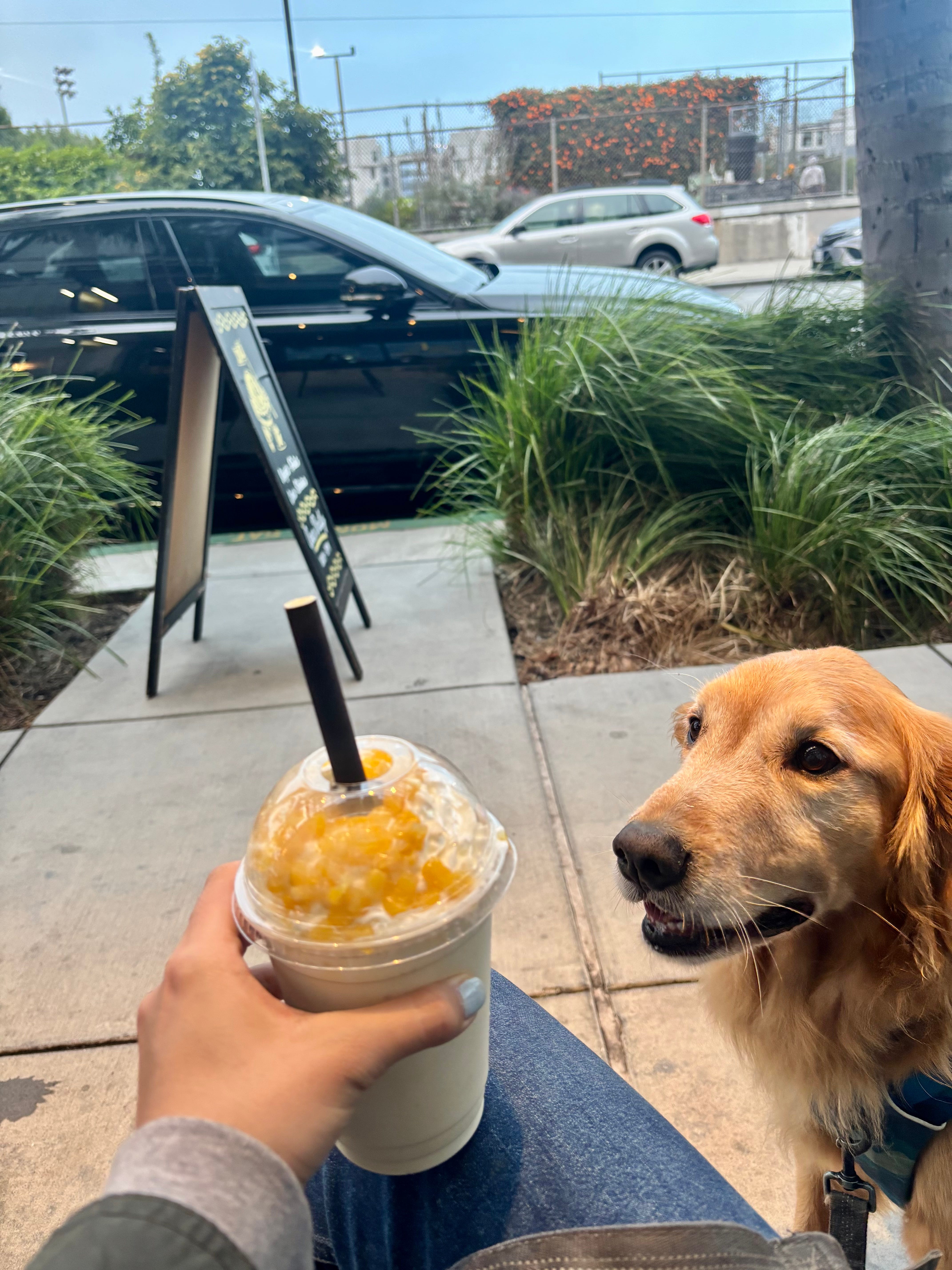
Walked dogs on the hilly terrain of San Francisco.
(Photo of Captain below. The most beloved client of the year.)
2. hold your people close (and find new ones)
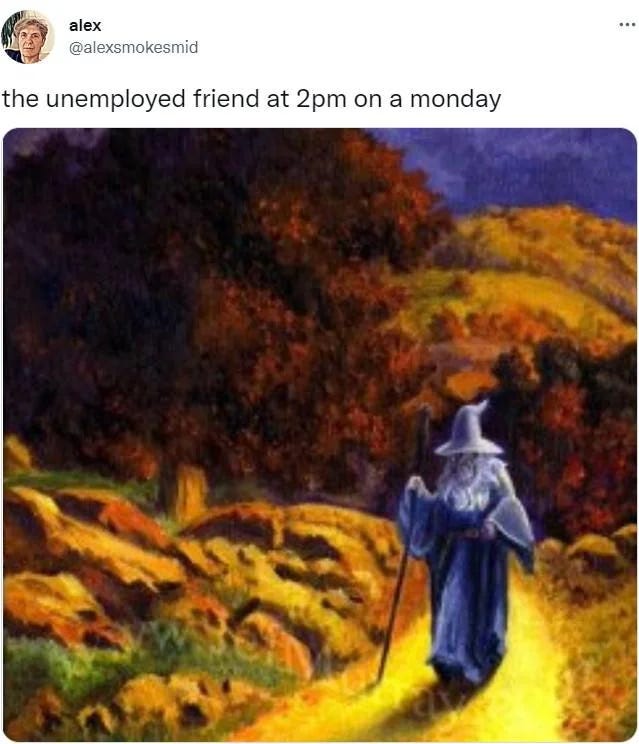
Nobody warned me how lonely this would be when your friends were at their 9–5 and you were just at home submitting job applications, with no visible difference between your weekdays and weekends.
The turning point was a call from a friend also on a career soul-searching year, ringing me from a boat somewhere off Bali, a well-known haven for digital nomads. She sounded happier. She was surrounded by people on the same boat, no pun intended.
So I went looking for mine. I found other freelancers and career-gappers on Substack, on IG (plugging my housemate Vivienne’s account on her 1/3 life crisis), in hobby clubs. I felt seen when connecting with people over stories about how wild job hunting had been. Rejection is a highly relatable experience. So you get some lovely sympathy points for talking about it. You’re already putting yourself out there every time you hit submit on an application. You might as well put yourself out there in a goofy way too.
3. show some self-love and stop comparing yourself to others
One evening my partner came home, told me about his day, and asked about mine. I started crying before I could even speak.
His day: helping train a state-of-the-art video language model, papers in the pipeline that might shape the future of AI.
My day: a few chapters of a novel, a few job-application emails.
In the ledger my brain was keeping, that made him essential to humanity and me useless to it. And it felt super permanent.
Looking back, it’s obvious that measuring yourself against someone running a completely different track makes no sense. I just couldn’t get unstuck from that self-doubt loop at the time. In a somewhat desperate move, I got a career coach, which helped more than I expected. So get a coach, a therapist, or a friend who always picks up the phone. Showing yourself some self-love doesn’t have to be a solo job.
4. Who are you without the job title?
You’re here because the last job didn’t work out, for whatever reason. There’s no perfect time to sit with the big quintessential question: who are you without your job?
Growing up in an intellectual East Asian family with two PhD parents, I was no stranger to elitism. Top schools, then a top job. I didn’t know there was any other way to live. People used to look at me and say how high-achieving I was. God, I hate that adjective now. Because I wasn’t achieving anything, high or low. It turned out that without the achieving, I had no idea who the person underneath was supposed to be.
People weren’t born to have a job, right? So before AI takes all our jobs and we all wake up with universal basic income, what do you do with your Tuesday? If it does not have to be impressive to the parents, nor money-generating, nor what you’ve been doing all your professional life.
My answer came to me with my move to the tech epicentre that is Silicon Valley. Surrounded by frontier research that will reshape everything, however incomprehensible to anyone outside the bubble. I want to own that gap by bringing clarity to complexity, translating breakthrough technology into credible, human-centered messages that earn society’s trust.
5. start writing on Substack / having a public presence (oh, I would know)
My wonderful partner works in a field where his GitHub is his CV. Recruiters would go with the candidate with more projects to show. This inspired me to start writing online. At my last job I’d always wanted to find my own voice through long-form writing, but by the end of the workday I just had so little energy. I resonated with Hu Anyan’s I Deliver Parcels in Beijing, a story of him cycling through gigs just to bank enough money and spirit to get back to writing in the countryside. If this man could build a writing life around parcel runs in Beijing, then I could build one around an empty calendar.
Publishing was nerve-racking at first, almost like stripping naked in public. Then strangers turn out to be very kind to your naked body (jk), and after a few shows, you’re just... yourself.
6. so much to learn, so little time!
I finally had time to do personal projects that I wasn’t able to during my last job. Got my Spanish to B2, then took it on the road to Colombia and El Salvador. Learned chess in Spanish, because why struggle once when you can struggle twice. Got onto the hype train of vibe coding and wrote a program that cleaned up and analyzed my entire email inbox. Became a certified barista. Read 25 books in 7 months (roughly one every week), with little reviews posted on Goodreads after each book.

As hard as unemployment sounds, I still believe that was the best decision I’ve made for myself. Life is hard, but it all shall pass. Why not make the most of it? So pick up a side gig or three. Hold your people close. Go easy on yourself. Ask what you’d do with a jobless Tuesday. Write in public. Learn something just for the joy of it.
If you’ve done your own stretch in the unemployment black hole, I’d love to hear it: what helped you the most?
This rings so true. Course correction is painful but necessary sometimes.
Favorite field note so far! Wonderful read as usual ☺️❤️